


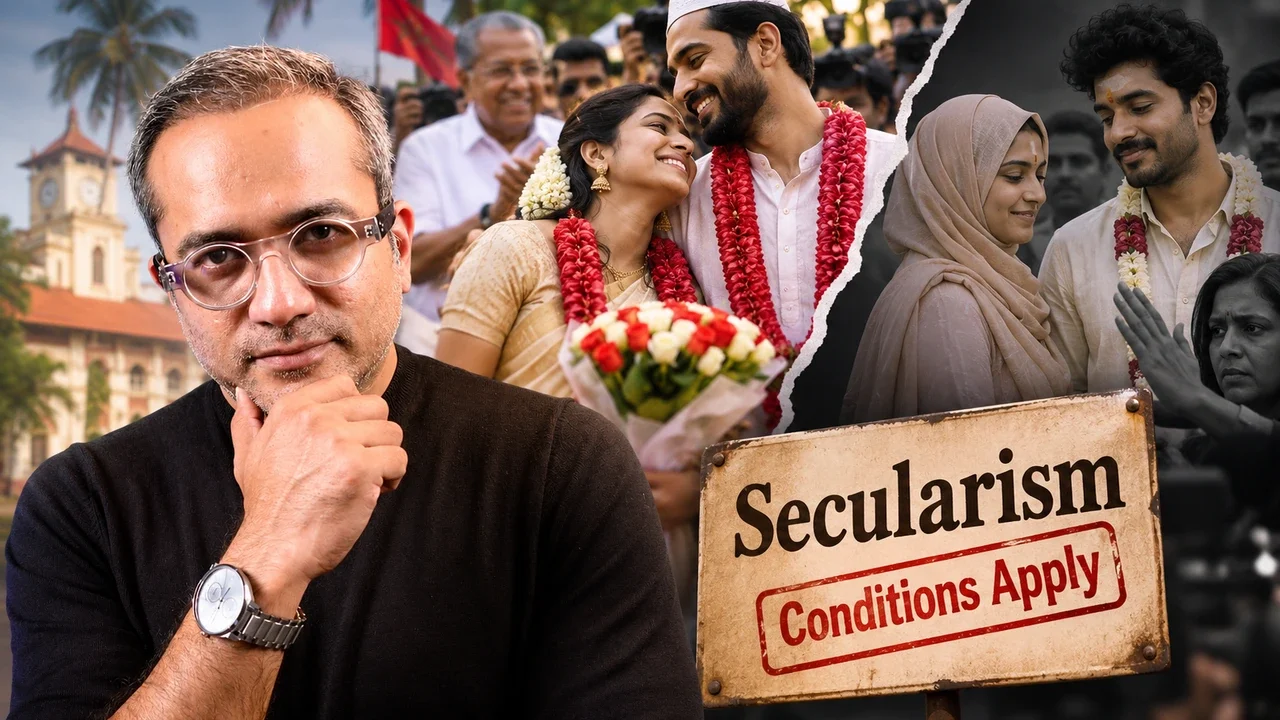
Love is a personal choice. Apparently, celebrating it requires checking the direction.
Kerala takes considerable pride in its secularism. We have speeches, seminars, human chains and enough progressive vocabulary to declare independence from the rest of the planet.
But try a small test.
Hindu woman + Muslim man.
Now reverse the order.
Muslim woman + Hindu man.
The principle remains exactly the same: two adults choosing each other.
Does the enthusiasm remain the same?
That is where the terms and conditions begin.
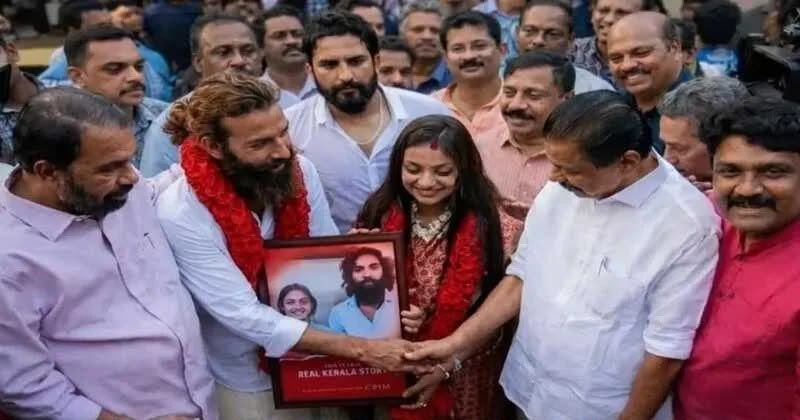
In the version of secularism under examination, the first pairing qualifies for public celebration. Love has defeated communalism. Humanity has triumphed. Someone fetch a bouquet, someone call the photographer, and someone please ensure the political leadership fits inside the frame.
Reverse the pairing, and our revolutionary vocabulary develops a sudden respect for privacy.
“This is a sensitive issue.”
“We must understand the family’s feelings.”
“Let us not communalise a personal matter.”
An impressive transformation. Five minutes ago, a relationship was a public victory for secularism. Now discussing a woman’s freedom is an unnecessary intrusion.
Apparently, love becomes private when the applause becomes inconvenient.
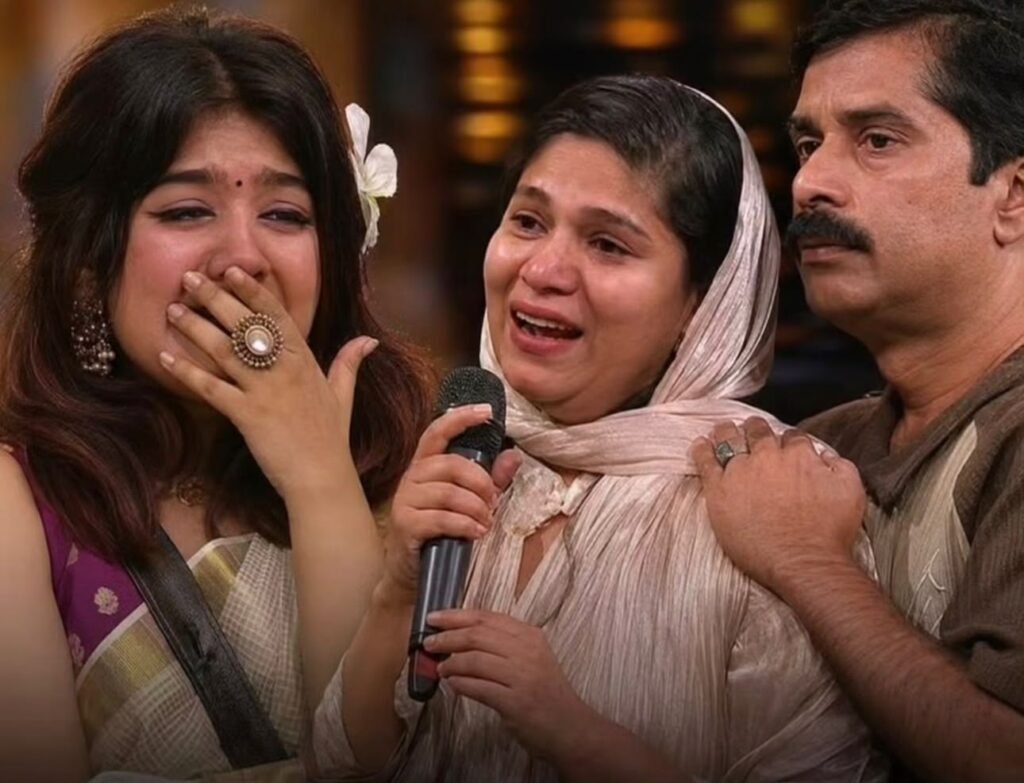
The Bouquet Test
There is nothing wrong with celebrating a Hindu woman marrying a Muslim man. They deserve the freedom to choose each other, to live safely and to build a life without becoming anyone’s communal property.
The question is whether that enthusiasm survives the reverse situation.
If a Muslim woman chooses a Hindu man, does she receive the same defence of her independence? When her choice meets resistance, do the champions of interfaith love rediscover their microphones?
Or does the bouquet department close for maintenance?
Nobody needs a minister at every wedding. Couples generally have enough complications without adding a speech.
But political leaders who turn one relationship into a demonstration of their progressive credentials invite a straightforward question: is the principle equal freedom, or selective publicity?
Women Are Not Community Property
Beneath the ceremonial secularism sits a much older assumption: a woman’s choice belongs partly to her community.
Her relationship becomes a gain for one side, a loss for another, a matter of prestige, a demographic development. Everybody gets a political interpretation. She gets instructions.
A woman is not a border district. Her marriage is not a territorial transfer.
That applies equally to Hindu families opposing Muslim partners and Muslim families opposing Hindu partners. Neither acquires ownership of an adult daughter by describing control as concern.
Parents can have feelings. They can express disagreement. But affection does not become a permanent licence to govern another adult’s life.
And political discomfort does not turn unequal treatment into cultural sensitivity.
Please Read the Fine Print
The satire writes itself:
We support interfaith love.
Subject to community approval, electoral convenience and the availability of a politically comfortable photograph.
That is a remarkably complicated operating system for a principle as simple as freedom.
A credible secular response does not require matching ceremonies for every couple. It requires consistent support for adults choosing their partners, including when defending that choice annoys people whose approval matters politically.
The real test begins when the applause costs something.
Kerala does not need another certificate announcing how progressive it is. It needs the confidence to apply its advertised principles in both directions.
Hindu woman + Muslim man.
Muslim woman + Hindu man.
Same freedom. Same dignity. Same right to choose.
If changing the order changes your principles, the problem is not the couple.
Your secularism came with a communal filter.

I am Arif Hussain Theruvath—The Doubt Engineer. Ex-Homeopath. Ex-Muslim. Ex-Communist. Ex-Woke. Every label I shed taught me that certainty is a cage and the key is a question. I don't sell answers; I engineer doubt—about narratives, authority, and comfortable lies. Because the right question can crack dogma, challenge blind faith, and set the mind free.









No Comments