



I. The three questions
Three questions, one answer.
Why does Congress keep losing? Not because it lacks leaders, money, cadre, or legacy. It has all four in quantities the BJP once envied. It loses because it is structurally incapable of saying no to its most offence-capable faction, and has been since 1919. Every time a reformist voice inside Congress has warned the party against accommodating the religious veto, the party has overruled the voice and accommodated the veto. A hundred years of this produces the party that cannot win elections anymore.
Why does the BJP keep winning? Not because of Hindutva in the form its critics describe. The religious-symbolic Hindutva of the 1980s and 1990s is no longer the BJP’s operating frame. What the BJP has built, deliberately and over two decades, is a civic-nationalist project with Hindu cultural confidence as its background texture and national development as its foreground demand. Viksit Bharat is not a temple. It is a highway, a digital stack, a G20 presidency, a Chandrayaan. The BJP wins because it occupies the ground the Lal-Bal-Pal tradition mapped out a hundred years ago, the ground Congress had first claim on and abandoned, and it occupies that ground with a coherence between stated identity and revealed policy that Congress has not managed in forty years.
What can the BJP learn from Congress’s failure? That the mechanism that killed Congress is not unique to Congress. Any party that accepts the logic of the religious veto, in any direction, will eventually be consumed by it. The BJP’s hard-right flank will produce its own test cases, its own offence-capable faction, its own pressure to overrule internal reformers in the name of movement solidarity. Whether the BJP accommodates that pressure or overrules it is the only question about Indian politics that actually matters for the next twenty years. If it accommodates, it becomes the Congress of 2050. If it overrules, the space for a Congress recovery closes permanently.
II. The road Congress did not take
Most Indians remember Lala Lajpat Rai as a martyr, the Lion of Punjab who died after a police lathi-charge. Fewer remember what he said about Section 295A.
Rai was a staunch Hindu. He was also an Arya Samaji, which placed him in the most important Hindu reform movement of the nineteenth and early twentieth centuries, against caste, against untouchability, for women’s education, for widow remarriage, for a rationalist reading of scripture. The Arya Samaj was a reform project that happened to speak in Hindu idiom because the community it was trying to reform was Hindu.
Rai’s position on 295A was not that the law should never exist. It was that if the law had to exist in the exceptional conditions of the 1920s, it should come with a sunset clause. The madness of the pamphlet wars was temporary. The shackles should be temporary too.
He lost. 295A became permanent. And everything he feared has since come true. The law has been used against cartoonists, comics, novelists, publishers, filmmakers, historians, and restaurant owners in Cherthala. The heckler’s veto is now the law of the land.
In the 1920s, it was a Hindu reformer from Punjab who understood that free expression was the precondition for social reform. The secular establishment of later decades inherited his law without inheriting his warning.
If Congress had listened to Lajpat Rai in 1927, the BJP of 2026 would not exist. Congress would still be alive, still reformist, still the natural party of Indian civic nationalism. Instead, Congress chose a different path, and that path is the one that explains everything that followed.
III. The Khilafat irony, and the birth of the religious veto
The Khilafat Movement is usually described, in Indian liberal commentary, as a tragic miscalculation by Gandhi, a well-meaning attempt to cement Hindu-Muslim unity that backfired. That framing is too polite, and it obscures the single sharpest irony in the modern political history of the subcontinent.
Starting in June 1916, the Arabs of the Hejaz, under Sharif Hussein of Mecca, launched the Great Arab Revolt against the Ottoman Empire. They fought alongside the British to expel Ottoman forces from Mecca, Medina, Jeddah, and the rest of the Arabian Peninsula. Sharif Hussein’s own justification for the revolt was religious. He accused the Committee of Union and Progress, the Young Turk leadership in Istanbul, of betraying Islam and violating the sanctity of the holy cities. The Arabs were not fighting against Islam. They were fighting against Turkish rule over Arab holy lands, and they framed the end of the Ottoman Caliphate as the liberation of Islam itself from usurpers. British, French, Egyptian, and Indian Muslim troops fought on the same side as the Arabs to bring the Ottoman Caliphate to an end.
At exactly the same time, in India, Indian Muslim leaders launched the Khilafat Movement (1919-1924) to defend the very Ottoman Caliphate that the Arabs were on the battlefield trying to dismantle. Gandhi committed Congress, and through Congress the broader Indian freedom movement, to the defence of a foreign theocratic institution whose actual subjects, the Arabs of its most important territories, were simultaneously fighting to destroy it.
When Ataturk abolished the Caliphate in March 1924, the Arab response was not mourning. Sharif Hussein briefly tried to claim the caliphate for himself, was promptly overrun by the Saudis, and the Hejaz became part of what is now Saudi Arabia. No Arab polity mourned the Ottoman Caliphate’s end. For the Arabs, it was the completion of the liberation they had begun in 1916.
Only Indian Muslim leaders mourned it. And they had forced Congress to mourn it with them.
Congress was not defending Indian Muslim interests against British colonial aggression. Congress was defending a foreign imperial institution that the actual Muslim communities of its core territories had already rejected on the battlefield. The cause was not a cause. It was a loyalty test imposed on Congress by its own hardline faction, a test that Gandhi chose to pass rather than risk the faction’s displeasure. He paid for it in 1921 with the Moplah Rebellion, with the betrayal of the reformist Muslim voices who had argued against Khilafat agitation, and with the permanent entrenchment of a specific operating rule in Indian political life.
The rule is this. When a sufficiently hardline faction within or adjacent to Congress declares a cause sacred, Congress accommodates, regardless of whether the cause makes sense, regardless of whether the cause serves the community it claims to serve, regardless of whether reformist voices within that same community oppose it. The intimidation is the mechanism. The cause is interchangeable.
Every subsequent episode in the pattern has the same mechanical structure. Shah Bano was not about defending Muslim women, who wanted the judgment upheld. It was about accommodating the All India Muslim Personal Law Board, which did not. The opposition to triple talaq reform was not about defending Muslim community interests, because Muslim women across India were fighting for the reform. It was about accommodating the orthodoxy that opposed them. The Waqf expansion was not about protecting minority religious property, it was about accommodating an institutional claim that the ordinary Muslim on the street neither asked for nor benefited from. The cause presented as sacred is never the cause of the community. It is the cause of the faction with the power to intimidate Congress into compliance.
The religious veto was born here. Not in the Hindu Mahasabha, which existed from 1915 but was marginal to Congress’s decision-making. Not in the RSS, which did not yet exist in 1919 and was founded only in 1925, after Khilafat had already ended. It was born in Congress’s own submission to intimidation, dressed up as Hindu-Muslim unity, on a cause that the actual Muslims most concerned with the cause had already decided on the battlefield.
Congress in this period was not a secular-liberal party with a Hindu-nationalist opposition across the aisle. It was a broad movement with deep Hindu-cultural roots, comfortable with Hindu symbolism across its spectrum. Cow protection, for instance, was a Congress cause long before it was a right-wing cause. Indira Gandhi fought the 1971 election on a cow-and-calf symbol. The notion that caring about cows was somehow ceded to the right is a post-1980s retrofit.
What Congress ceded was not the symbols. It was the sincerity. And what it gained, in exchange, was a permanent operating system built on intimidation, which it has been unable to dismantle for a hundred years because dismantling it would require confronting the faction that the system exists to accommodate.
The price of that first surrender was paid, almost immediately, in blood. In August 1921, while the Khilafat Movement was still at its peak, the religious mobilisation that Gandhi had sanctioned, and that Khilafat leaders had carried into every pulpit and madrasa in the country, produced the Moplah Rebellion. Thousands of Hindus were killed. Temples were destroyed. Women were raped. Forced conversions were carried out at the point of a sword. Ambedkar, writing in 1940 in Pakistan or the Partition of India, described it in plain terms as a pogrom against Hindus conducted in the name of the Caliphate. Annie Besant and Sankaran Nair said the same thing in real time.
Gandhi did not withdraw the Khilafat agitation. He did not sever ties with the Khilafat leaders whose religious mobilisation had produced the conditions for the massacre. He did not rename what had happened. The agitation continued. The alliance continued. The category “Hindu massacre” was not admitted into the political vocabulary of the freedom movement, then or later. The intention was preservation of the movement. The omission was acknowledgement of the cost. Both served the same faction whose intimidation had produced Khilafat in the first place.
The wound is still bleeding. Not as vengeance, but as an unresolved historical fact that the same intimidation mechanism will not allow to be named. A hundred and five years later, calling the Moplah Rebellion a Hindu massacre is still treated as communal provocation in Indian liberal discourse, even though that is exactly what Ambedkar called it in print. The original event was intimidation. The denial of the original event is intimidation. The assumption underneath the denial is that Hindu sentiments do not remember, that the community has no institutional memory, that the injustice does not need to be addressed because it will not be recollected. Every subsequent episode of Hindu suffering has been processed through this assumption, from Direct Action Day in 1946 to the Noakhali riots the same year, from the Partition massacres in Punjab and Bengal to the Kashmiri Pandit exodus of 1990. That Hindus do not remember. That remembering is itself communal. That recollection of injustice must be confused with desire for revenge so that the injustice can be erased from the record.
This is the assumption that the BJP’s rise has falsified. Hindus do remember. Not with vengeance, but with the ordinary faculty of recollecting what happened and declining to pretend it did not. And the political formation that spoke to this recollection, rather than shushing it, is the one that now governs the country.
IV. The sincerity gap
A party’s relationship to religious and cultural symbols reads, to voters, as either theatre or identity. The theatre can be competent. Rahul Gandhi in a temple, Priyanka in a sari at a yagya, the janeu revealed on camera, all of this is professionally executed. What it cannot do is overcome the underlying structural fact, which is that Congress’s policy architecture treats Hindu practice as negotiable and minority orthodoxy as sacrosanct. The voter sees the temple visit and the Shah Bano reversal and the silence on Cherthala, and draws the obvious inference.
The BJP’s relationship to the same symbols reads differently, not because the BJP’s theatre is better produced, but because the underlying policy is coherent with it. A party that builds Ram Mandir, talks about Uniform Civil Code in plain sentences, and does not apologise for Hindu-majority cultural assertion is not performing Hindu identity. It is expressing it.
This is the ground Congress actually lost. Not the symbols. The credibility of the person holding the symbols.
V. The asymmetry, and the fuel it provided
The Hindu Code Bills of the 1950s were a genuine achievement. They outlawed bigamy among Hindus, gave Hindu women inheritance rights, reformed marriage and divorce. They were also, crucially, imposed on Hindus by a state that believed, correctly, that religion was not a reason to deny equality to women.
That logic was never applied to other communities. Muslim personal law remained untouched. Christian personal law was reformed only piecemeal and late. The state that was confident enough to tell Hindus how to conduct their marriages was not confident enough to tell any other community the same thing.
The Shah Bano case in 1985 made the asymmetry impossible to ignore. A Muslim woman won maintenance from the Supreme Court. The Rajiv Gandhi government, facing clerical pressure, passed legislation to overturn the judgment. The same government then, to balance the books politically, ordered the opening of the locks at the Babri Masjid for Hindu worship. Both decisions were appeasement. Both were offered as bookends to the same electoral calculation. Both hollowed out whatever credibility Congress had left on equal treatment.
This is where the evolutionary logic kicks in. Hindu nationalism did not grow in a vacuum. It grew as a reaction to a specific, repeated, observable pattern, in which the state would tell Hindus what they could and could not do culturally while declining to have the same conversation with anyone else. Every Shah Bano produced a thousand foot soldiers. Every Waqf expansion produced ten thousand. The fuel for the Hindu right was not manufactured by the RSS. It was delivered, drum after drum, by the party that now wonders why the fire is so large.
VI. The googly: how the BJP redefined Hindutva and left Congress swinging
The most important political move of the last decade is one that Congress still has not understood.
The early Hindutva of the 1980s and 1990s operated on religious symbols, temple politics, and cultural assertion. It was legible, it was mobilising, and it was easily caricatured as communalism. The BJP under Modi has done something much more sophisticated. It has moved the unifying axis from religion to national development, from “we are Hindus” to “we are Indians building a developed nation,” with Hindu cultural idiom as ambient texture rather than programmatic demand.
Highways. Digital public infrastructure. International standing. Skill India. Startup India. G20 presidency. Chandrayaan. Make in India. The slogan Viksit Bharat is not a religious slogan. It is a civic-nationalist project with Hindu cultural confidence as its background assumption, not its foreground demand.
This is exactly what the Lal-Bal-Pal tradition had argued for a hundred years ago. Cultural-civilisational nationalism as the frame, development and reform as the substance, religious pluralism as the operating reality. The Arya Samaj wanted this. Tilak wanted this. Lajpat Rai wanted this. Congress had the first claim on it. Congress abandoned it.
And when the BJP picked it up, Congress responded by putting on a janeu and visiting Kedarnath, which is answering the question of 1990 when the question of 2026 has been reframed. The BJP changed the pitch. Congress is still playing the old shot.
The move is also intellectually honest about religion in a way Congress’s secularism has never been. A two-way reading of religious liberty means that soft public expression of the majority’s cultural idiom is not a violation of secularism. It is what secularism in a Hindu-majority country is expected to look like when it is not being performed for Western observers. Demanding that the state be aggressively anti-religious is itself a form of establishment, the establishment of a specific secularist aesthetic as the only permitted public language. The BJP’s settlement, soft Hindu cultural projection inside a developmental-nationalist frame, is more coherent than Congress’s settlement, which tried to regulate Hindu practice while leaving every other community’s practice alone.
VII. Why Congress structurally cannot recover
A party that is internally democratic and inclusive sounds virtuous. In practice, inclusivity in a party that contains an Islamist-sympathetic faction means that faction’s veto becomes effective even without majority support, because the rest of the party treats accommodation as the path of least resistance. The decision rule is not “what does the coalition believe,” it is “what does the most offence-capable faction tolerate.” That is a structural flaw, not a leadership flaw.
And the reform-capable leaders do not stay to fight. Leaving Congress is culturally costless in Indian politics. The Himanta Biswa Sarmas, the Jyotiraditya Scindias, the Ghulam Nabi Azads who leave are not anomalies, they are the pattern. Congress is not just failing to reform. It is acting as a training academy for the formations that will replace it, exporting its own reform-minded leaders to parties that can actually use them.
Congress cannot reform because its decision architecture prevents it, and its reformers will not stay because staying is futile. Every departure makes the remaining decision architecture more captured by the faction that held the veto in the first place. The mechanism is self-reinforcing.
VIII. The capture thesis, and the evidence that breaks it
There is a standard concern about the BJP era, that it represents creeping capture of Indian institutions. Federalism is being hollowed out. Media has been corporatised into compliance. The judiciary is under pressure. The argument deserves an honest answer, and the honest answer is that it does not survive contact with what is actually observable in 2026.
Start with media, because media capture is the most-repeated and least-examined claim in Indian liberal discourse. If state capture of media were the operative mechanism, the largest critics of the ruling party would have been silenced by now. They have not been. They have been promoted by audience behaviour to scales that legacy television never achieved.
Dhruv Rathee’s YouTube channel has over 31.5 million subscribers and has crossed 5.3 billion cumulative views, operating from Germany and producing systematic criticism of the Modi government as its central content category. Ravish Kumar, who resigned from NDTV in November 2022 after the Adani acquisition, crossed 10 million subscribers on his independent YouTube channel within 18 months of launch, and continues to produce Hindi-language critical journalism at a reach that exceeds his NDTV audience. The Wire, The Print, Scroll, Newslaundry, and Article 14 continue to publish daily. Documentary makers produce films on Modi that win international festival awards. If this is capture, it is the most visible, most monetised, most internationally-celebrated capture in democratic history.
What is actually happening is not capture, it is realignment. The business model of legacy media is collapsing globally, not because governments are capturing it but because audiences are migrating to platforms that governments do not control and cannot control. The old Indian media was Congress-aligned because Congress had spent decades building the alignment through means that the current government has not matched and is not attempting to match. Nehru’s government banned books, including Nine Hours to Rama and Aubrey Menen’s Rama Retold, and maintained a pliant state broadcaster with no independent voice. Indira Gandhi’s Emergency, from June 1975 to March 1977, arrested journalists, shut down newspapers, imposed prior censorship on every publication in the country, and disconnected electricity to the Bahadur Shah Zafar Marg press lane to stop the morning edition from running. The Press Council was dissolved. The Shah Commission, set up after the Emergency to document the abuses, recorded the systematic detention of journalists, the suspension of news services, and the use of the Defence of India Rules to muzzle the press for the entire 21-month period. The term “press capture” in Indian political history is not a BJP-era coinage. It is an Indira-era accomplishment.
The party that ran the most severe media capture in independent India’s history is now the party accusing the BJP of attempting media capture at a fraction of the intensity. And media is only one line of this accounting. The death-of-federalism charge, now the central liberal critique of the BJP era, is being made by the political tradition that wrote the actual playbook on dissolving democratically elected state governments. In July 1959, Nehru’s government dismissed the EMS Namboodiripad ministry in Kerala, the first elected Communist government in the world, using Article 356 against a government that had been in office for twenty-eight months and had lost no confidence vote. What followed, over the next thirty-five years, was Congress making routine use of the same provision to dismiss opposition state governments whenever electorally convenient, with Indira Gandhi turning it into an administrative reflex. The Janata Party, when it briefly came to power, used the provision in the same spirit at lower volume. The Supreme Court was finally forced to intervene in 1994, in the S.R. Bommai judgment, laying down the constitutional limits that should have applied all along. The Bommai framework was necessary only because of the Congress pattern. The BJP, when it came to power in 1998 and after, has used Article 356 within the Bommai limits, with judicial tests applied and documented, and has still been charged by Congress with destroying federalism.
The pattern reads the same across every institution. The party that habitually bent the rules now governs from opposition and accuses the party that follows the rules of lawlessness. Voters can see this, and voters reward consistency.
Congress handed the BJP the exact stick it is now being beaten with, on every one of its current critiques. On media capture, the Emergency is the counter. On federalism, the Kerala dismissal and the Indira record are the counter. On authoritarianism, the twenty-one months of suspended civil liberties are the counter. On institutional erosion, the committed-judiciary doctrine of the Indira years is the counter. On election capture, Indira’s own 1971 election was set aside by the Allahabad High Court for corrupt practices, the judgment that triggered her decision to suspend the Constitution rather than vacate office. On state-sponsored communal violence, the closest historical analogue in independent India is the November 1984 Delhi pogrom against Sikhs, with over 3,000 killed in three days, Congress leaders Sajjan Kumar (convicted 2018), Jagdish Tytler (still under prosecution), and Kamal Nath named in eyewitness testimony, and Rajiv Gandhi himself supplying the justification with the “when a big tree falls, the earth shakes” formulation. By contrast, Gujarat 2002, the case routinely invoked as the BJP’s defining sin, was a riot triggered by the Godhra train burning of 59 Hindu pilgrims, an event the trial court in February 2011 ruled was a planned conspiracy, convicting 31 with 11 death sentences, with the Gujarat High Court upholding the conviction in October 2017. The riots that followed were contained by state-deployed police and Army, investigated by a Supreme Court appointed Special Investigation Team that cleared Modi in 2012, with the Supreme Court upholding the SIT findings in 2022 and noting that those who had kept the case alive had done so with “ulterior motives.” The actual record runs in the opposite direction of the rhetoric.
The pattern of recasting also runs only in one direction. Godhra is reframed as an accident despite judicial findings to the contrary. The Kashmiri Pandit exodus is reframed as a migration despite documented assassinations and threats. The Bengal post-poll violence of 2021 is reframed as routine political clashes despite the CBI and NIA investigations that documented systematic targeting of opposition workers and Hindu households. The Direct Action Day killings are reframed as generic communal violence. In every case, the framing slides in the same direction, and the direction is the one that protects the political tradition that built the framing apparatus in the first place.
Every time a Congress spokesperson frames the current government as an existential threat to Indian democracy, the honest response is “compared to what,” and the honest answer is a Congress record that no current party, including the BJP, has come close to matching. What is happening in current opposition discourse is closer to projection than analysis. The opposition is fearing in the BJP what the opposition itself did when it held power, projecting its own historical reflexes onto a party that has not exhibited them. The fear is real but the precedent is the opposition’s own, not the ruling party’s.
The structural evidence runs the same way. The BJP government’s Bharatiya Nyaya Sanhita, which came into force in July 2024, replaced the IPC and added Section 103(2), a specific provision making mob lynching by five or more persons on grounds of race, caste, community, language, or belief punishable by death. This is the first time Indian criminal law has carried a dedicated death-penalty provision for mob violence, and it was written and passed by the same government routinely accused of governing through mob rule. A party that wanted to retain power by mob muscle would not draft, pass, and enact a law making mob killing a capital offence. A party that wanted to govern by mob would do what Congress did during the Emergency, which is suspend the law, not strengthen it.
And the visible internal differentiation within the BJP between its hard flank and its governing centre is now mainstream documented reporting, not analytical inference. The Print, in a May 2025 piece by Sanya Dhingra titled “From destroyer of GC Hindus to Maulana Modi jibes, BJP’s new opposition is arising from within,” documented the split with specific triggers, the caste census decision, the government’s Pahalgam response, and the Nishikant Dubey row, each of which produced public attacks on the Prime Minister from within the broader Hindutva ecosystem. The hard flank is openly calling Modi “Maulana Modi” for his perceived softening on minority outreach, the Pasmanda Muslim outreach scheme, and the moderation of inflammatory rhetoric. A captured party does not produce internal critics with that vocabulary. It produces enforcement against them. The fact that the hard flank can call the Prime Minister Maulana in public, and the Prime Minister continues to govern from the centre rather than respond to the flank, is the structural feature the capture thesis cannot explain.
This split is the most important single fact in current Indian politics, and almost no one has named it correctly. The “new Congress” is not a future party that will emerge to compete with the BJP. It is already here. It is the civic-nationalist faction inside the BJP that the hard flank is calling Maulana Modi, and the further it consolidates its hold on the governing centre, the more it occupies the space Congress vacated in the 1980s. The trad-vs-raita debate is not an internal squabble. It is a succession contest, and the side that wins it will be the party that governs India for the next generation. If the Maulana Modi side wins, the BJP completes the migration into civic nationalism that Congress refused to make and there is no political space left for a Congress recovery. If the trad side wins, the BJP becomes the Congress of 2050, and the cycle starts again with a new formation emerging to occupy the abandoned ground.
Treating the current transition as capture is nostalgic thinking dressed up as concern. An independent critic cannot be gagged forever. Gagging one produces three. The infrastructure of criticism is now distributed in a way that no state, including far more capable ones than India’s, has managed to suppress. If Tiananmen cannot be erased from the global record despite China’s actual capacity and intent, the BJP-era India, which has neither the capacity nor the intent of the Chinese state, is not running a comparable suppression operation on anything. The capture comparison fails on every axis, on capacity, on intent, on observable outcome.
Federalism is a more serious question, but only if it is examined rather than asserted. The centralisation happening under the current government is real. The question is whether it is capture or correction. Capture means central power entrenches one faction permanently. Correction means central power closes loopholes that were being exploited. The two look similar in the short run. They are distinguished by what happens at the next transfer of power. India has run this test once, in 2014, and the institutions transferred. The next transfer will tell us more.
But there is a harder question hiding inside the federalism concern. The same federal structure that protects regional autonomy also creates sub-national jurisdictions that can be exploited by actors operating against the constitutional core. A federal structure that cannot be corrected when sub-national actors operate against the constitutional core is not a defence of democracy, it is a loophole. And the actors who have historically exploited this loophole are not the ones the liberal commentary frame worries about.
IX. The asymmetry of precedent
The last ten years have been the maximum-stress test for the Hindu-nationalist project. Electoral dominance, organisational depth, a favourable judicial environment at the margin, the full package. If Hindu nationalism were capable of the categorical capture its critics have warned about for seventy-five years, this was the window. The window is now mostly behind us, and the country is not Pakistan, is not Bangladesh after 1971, is not Erdogan’s Turkey, is not Khomeini’s Iran. It remains a functioning republic. Modi criticism is the single largest category of Indian political content online, with critics operating visible million-subscriber businesses. Films, documentaries, and books critical of the ruling party continue to be produced, distributed, and internationally awarded. Jokes about Hindu deities continue to be made. They produce complaints under 295A, social media boycotts, hashtag campaigns, and occasional arrests as in the Cherthala case and the 2021 Munawar Faruqui prosecution. They also produce continued comedic output, continued circulation, continued careers. The line on Hindu sentiment is contested, but the contestation happens in public, with both sides holding microphones, and the speech that gets prosecuted survives in the record. That is not what categorical capture looks like. Categorical capture is when the speech does not survive, the speaker does not survive, or the conversation cannot happen at all.
The contrast with what categorical capture actually looks like is sharper when the three tiers are separated. Tiananmen jokes and references are blocked across Chinese platforms by state command, with even DeepSeek, an AI model, refusing to engage despite being a generative system whose entire commercial proposition is engagement. That is state-enforced capture. Muhammad jokes are not state-banned anywhere outside the Muslim world, but they are pre-emptively avoided by cartoonists, comedians, publishers, and AI systems including ChatGPT and Claude, not because any law requires it but because the reflex of fear runs ahead of any specific instruction. Equivalent jokes about Hindu deities, Christ, the Buddha, or Jewish figures are produced freely by default, and only get censored after the fact when a hardliner objects loudly enough to force a takedown or a prosecution. The first tier is state capture. The second tier is bone-deep ideological fear that needs no state to enforce it. The third tier is contested speech with reactive pushback. Indian politics, even after ten years of BJP dominance, operates in the third tier. The Islamist programme operates in the second tier without state power and migrates to the first tier when it acquires state power. That difference is the entire argument.
This is not a claim that requires trust. It can be tested directly, in the next ten minutes, by anyone reading this essay. Open ChatGPT, Claude, Gemini, or any major frontier AI system. Ask it to write a short joke about Krishna. Then ask it to write the same kind of joke about Christ. Then ask it to write the same kind of joke about Muhammad. Watch what happens at each prompt. As of the time of writing in early 2026, the first two will be produced with mild caveats or none at all, and the third will be refused, hedged into uselessness, or rewritten into a non-joke about respect for traditions. The systems are not following different laws. They are following different reflexes of pre-emptive fear, trained into them by the cumulative behaviour of the human producers whose work they were built on.
The asymmetry has now become visible enough that public criticism is widespread and platforms are beginning to respond. Grok has moved toward permitting blasphemy across all religions on the same terms, treating the asymmetric refusal as itself a form of bias. The other major systems will eventually have to choose between two corrective paths. Either they converge toward Grok’s symmetric permissiveness, in which case the asymmetry the essay describes will have been real and is now being corrected. Or they converge toward symmetric restriction, refusing blasphemy against all religions equally, in which case the corrective response is also confirming that the asymmetry was real, just by removing it through universal restriction rather than universal permissiveness. The test the essay invites the reader to run holds across both futures. A reader running it today sees the asymmetry directly. A reader running it in five years sees either the asymmetry corrected toward openness, which is the better outcome, or the asymmetry corrected toward closure, which is the worse outcome but still a confirmation of the underlying diagnosis. Whichever trajectory the platforms take, the observation that the original asymmetry existed, and that it required correction, is the data point that matters.
The revolutionary, state-capture-capable ideological threat in the Indian context is the civilisational-Islamist one, and it is a documented programme.
The Muslim Brotherhood’s 1991 Explanatory Memorandum on the General Strategic Goal for the Group in North America, authored by Mohamed Akram and entered into US federal court as Government Exhibit 003-0085 in the Holy Land Foundation prosecution, describes the project in its own words. It calls the strategy a “Civilization-Jihadist Process.” It states that the work in America is “a kind of grand Jihad in eliminating and destroying the Western civilization from within and sabotaging its miserable house by their hands and the hands of the believers.” It defines settlement, enablement, and rooting as the long-term phases of the project. It attaches a list of front organisations. It is a planning document for civilisational displacement, written by the movement that has produced every major political-Islamist formation in the Sunni world.
The Indian version is not theoretical either. The Popular Front of India’s internal strategy paper, titled “India 2047: Towards Rule of Islam in India,” was seized by the Bihar Police from Ahmad Palace in Phulwarisharif on 11 July 2022, during a crackdown that also uncovered a plan to attack the Prime Minister during his visit to Patna. The document, eight pages long and marked “Internal Document: Not for circulation,” lays out a roadmap for Islamic rule in India by the centenary of independence. It was cited in NIA chargesheets, became part of the evidentiary basis for the government’s September 2022 ban on the organisation under the Unlawful Activities Prevention Act, and has continued to feature in chargesheets and prosecutions as recently as 2025.
These are documents, with dates, authors, evidentiary provenance, and court records. They describe civilisational-jihadist strategy in the explicit terms of the actors who wrote them. The comparative precedent is available in every regional and neighbouring state where political Islam has been allowed to operate unchecked. Pakistan from the Zia years onward. Bangladesh during its Islamist-aligned phases. Iran after 1979. Turkey under the full AKP consolidation. Afghanistan under two Taliban eras. Egypt’s Brotherhood year. The precedent is consistent and documented.
Treating Hindu nationalism and civilisational Islamism as symmetric threats is false equivalence. The evidence is asymmetric.
And the federal structure’s permeability to the second threat, not the first, is the actual federalism problem that requires corrective attention. PFI was operating in Kerala, where state-level protection shielded it from federal scrutiny for years. The CPI(M)’s tacit electoral understandings with minority-extremist vote blocs, the West Bengal government’s handling of demographic management in border districts, the use of state-level minority institutional frameworks to shelter organisations that would not survive federal review, these are not right-wing talking points, they are administrative facts. A federal system that cannot correct for these is not preserving diversity, it is underwriting a specific category of threat, and the category is the one with global precedent and explicit planning documents.
X. The global confirmation, broadcast in 4K
The BJP’s diagnostic frame is being confirmed, in real time, in high resolution, by events its critics cannot rebut, because the events are happening in their preferred comparison countries.
Every grooming gang conviction in Rotherham and Rochdale. Every no-go zone documentary from Paris and Marseille. Every Swedish suburb that becomes ungovernable. Every Dutch election where Wilders gains a seat. Every German debate about the Burkaverbot. Every Austrian coalition crisis. Every cartoonist murdered in Europe for drawing the wrong cartoon. All of it visible to Indian voters on their phones, in near real time, without any filter the Indian left can impose.
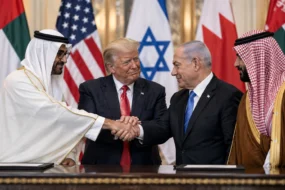
And from the other direction, the convergence is equally telling. The Abraham Accords. Saudi modernisation under MBS. The UAE’s explicit positioning against Muslim Brotherhood-style Islamism. Egypt’s continued suppression of political Islam. Jordan’s quiet managerial approach. When the serious Muslim states themselves have identified political Islam as a security problem rather than an ideology to accommodate, the Indian liberal position that India’s treatment of the same vector is uniquely communal becomes untenable.
The BJP does not need to convince Indians that its diagnosis is correct. It only needs to stand next to the evidence. The evidence is broadcasting itself.
Congress’s position is not just structurally difficult, it is strategically impossible. Its framework depends on the assumption that its concerns about Hindu-majoritarian politics are the serious concern and Hindu-majoritarian concerns about Islamist politics are manufactured communalism. The global information environment is demolishing this assumption every week, with footage. You cannot run a political party on a diagnostic frame that the evening news contradicts.
And because the external environment is confirming the diagnosis and addressing the threat vector, the internal pressure on the BJP to stay hard-right is actually reducing. What required street-level assertion in 1992 is now mainstream policy in allied democracies. The BJP can soften because it no longer needs to be the lone voice. The civic-nationalist faction inside the BJP, the one the hard flank is now calling Maulana Modi, is the formation that will consolidate further as the generation that grew up on Ram Mandir hands the machinery to a generation that grew up on Chandrayaan.
XI. The warning that now belongs to the BJP
The thing that killed Congress was not that it was too Hindu or not Hindu enough. It was that it stopped listening to its internal reformers. It stopped listening to Lajpat Rai on 295A. It stopped listening to Ambedkar on personal law. It stopped listening to its own Hindu Code Bills logic when the logic pointed toward uniform civil treatment. Every time Congress had a reform-minded voice on the floor warning it against the religious veto, Congress overruled the voice and accommodated the veto. Seventy-five years of this produced the party that cannot win elections anymore.
The BJP’s advantage today is that it is listening to its internal civic-nationalist voices, moving from religious Hindutva toward development-nationalism, softening where the evidence supports softening, holding firm where the evidence supports holding firm. This is not a permanent achievement. It is a current behaviour. Politics is continuous pressure-testing, not a destination. The BJP’s hard-right flank is still present, still pushing. There is no such thing as a completed migration in political parties. The only question that matters is whether the BJP will keep listening to its own Lajpat Rais, or whether it will start overruling them the way Congress did.
The test cases will arrive. Free expression cases where Hindu sentiment is the complainant rather than Muslim sentiment. Academic cases where the pressure to silence comes from the right rather than from the left. Cultural cases where a reformer inside the Hindu tradition says something the tradition’s loudest voices do not want said. Minority cases where the principled position is to protect the minority against mob pressure. The BJP will face these tests, because the right-wing flank of every successful center-right party produces these tests. The test is not whether the flank exists. The test is whether the party accommodates the flank or overrules it.
If the BJP accommodates, it becomes the Congress of 2050. It builds its own religious veto, empowers its own offence-capable faction, institutionalises its own asymmetry, and produces the conditions for its own successor formation. The mechanism is not unique to Congress. Any party that lets the veto in, in any direction, will eventually be consumed by it.
If the BJP overrules its hard flank, it becomes the civic-nationalist party India has needed for a hundred years, and the space for Congress’s recovery closes permanently.
Which of these two paths the BJP takes is not a question that will be answered by a single decision. It will be answered by hundreds of small decisions, over years, in cases that will not make the front page, in legislative debates that will not trend on social media, in internal party disputes where some reformist voice on the floor will say the thing that the room does not want to hear. Whether anyone in the room listens is the only thing that matters.
XII. The foundation, or the house
A hundred years ago, a Hindu reformer on the floor of the Central Legislative Assembly tried to stop a temporary law from becoming a permanent cage. He was overruled. The cage was built. The party that built it is now trapped inside it and cannot get out.
The Vishu poster in Cherthala is a reminder of what the cage looks like from the inside. A provocation, a mob, a state that flinches, a chill that spreads. The law that makes this choreography possible was a mistake of 1927 that Lajpat Rai identified in real time and that his party refused to correct.
The cage Congress built is now the cage Congress lives in. The BJP, for now, is governing from outside it. The next twenty years will determine whether it stays outside or builds its own.
The warning has changed hands. It no longer belongs to a dying party. It belongs to the one that has just begun to govern as if it intends to last.
Fix the foundation, or watch the house fall. Congress has the answer. The BJP has the choice.



No Comments