


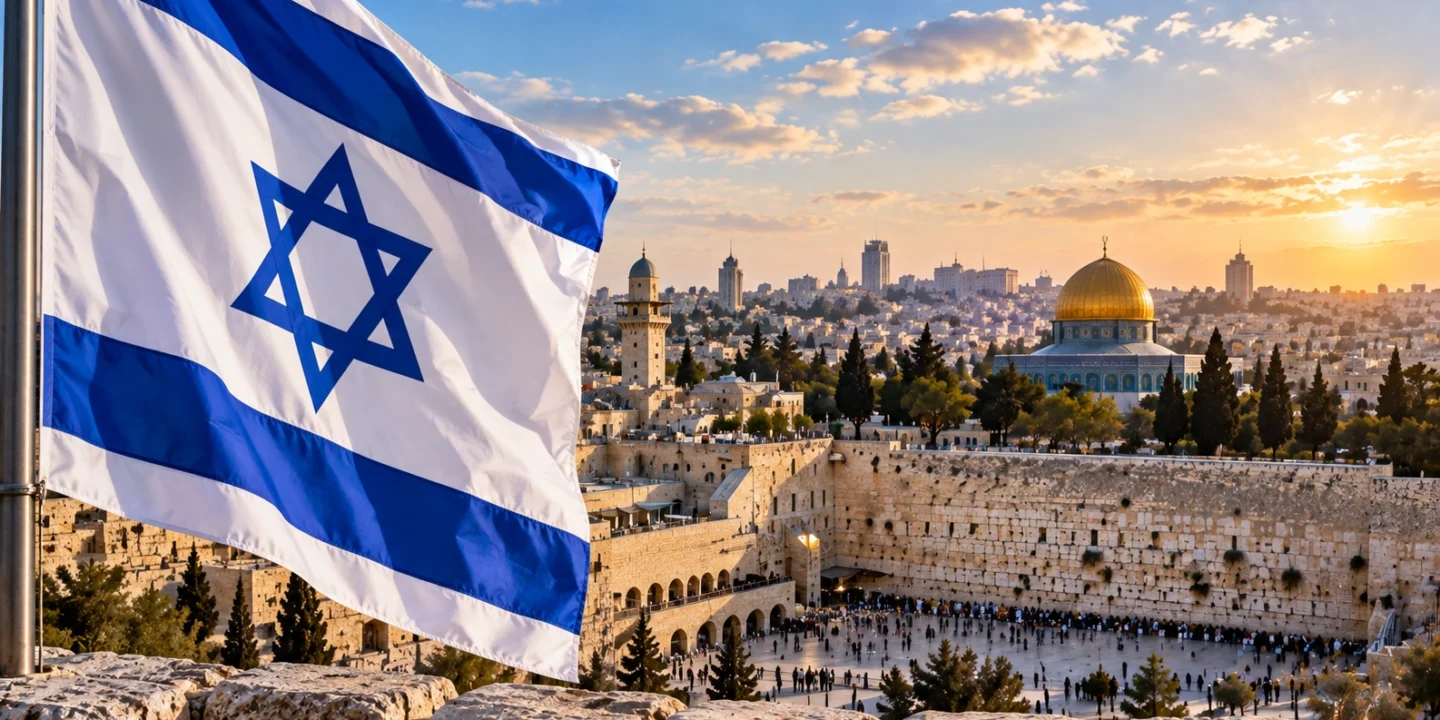

A Report on My Second Visit to Israel
Delegation of the Consulate General of Israel to South India, Bengaluru, 20–26 June 2026.
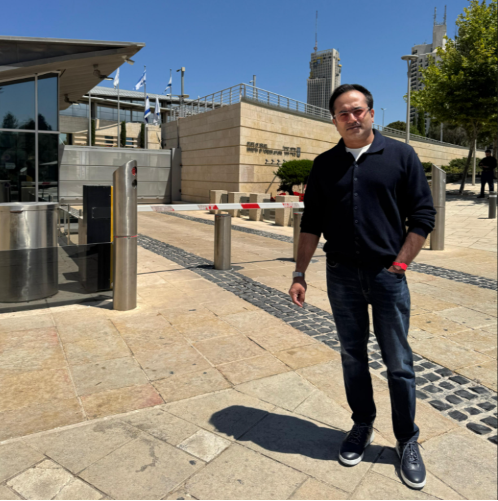
This is my second visit to Israel. The two trips were not the same, and the difference is the whole point of this report. The first visit, in January 2025, was about understanding. The second, at the invitation of the Consulate General of Israel to South India, was about experience. The first taught me why Israel matters. The second showed me what Israel is. Together they have carried me from observation to conviction, and now toward action.
The First Visit: Learning the Why
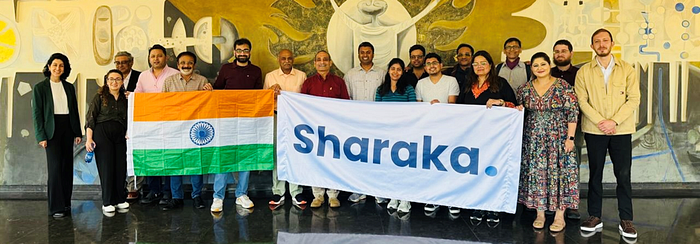
My first visit came through Sharaka, an organization built around the Abraham Accords and the work of people-to-people peace. Its focus was the ground reality of antisemitism and its long arc, from the Holocaust to October 7. The itinerary was designed to explain a cause, and every stop carried that logic. The Nova festival site and Nir Oz made the violence of October 7 concrete. A survivor’s testimony and the history of Jerusalem gave it depth. Yad Vashem set it against the longer record of how hatred ends. The briefing by IMPACT-SE drew the line forward, into how school textbooks across the region carry that hatred to the next generation, and how education can be turned the other way.
After the formal program ended, I stayed on to reach the sites and the people tied to October 7. Two of them were Sabitha and Meera Mohanan, caregivers from Kerala. At Nir Oz they held a safe-room door shut for more than four hours while Hamas attackers shot at it and tried to force it open, saving themselves and the elderly couple in their care. Majdal Shams, where twelve children were murdered, told the same story in a different register. The footage I brought back from these places crossed five million views. The framework I came home with was simple. This is an ideological conflict, not merely a territorial dispute.
The first visit did not end when I landed back in Kochi. Yad Vashem had left an urge to see the reality at its source. In May 2025 I acted on it and traveled to Auschwitz and Birkenau in Poland. There I did not read the memory. I stood inside it. That is where I understood, on the ground itself, why a nation documents its dead and refuses to let the record be softened.
The Second Visit: Seeing the Country
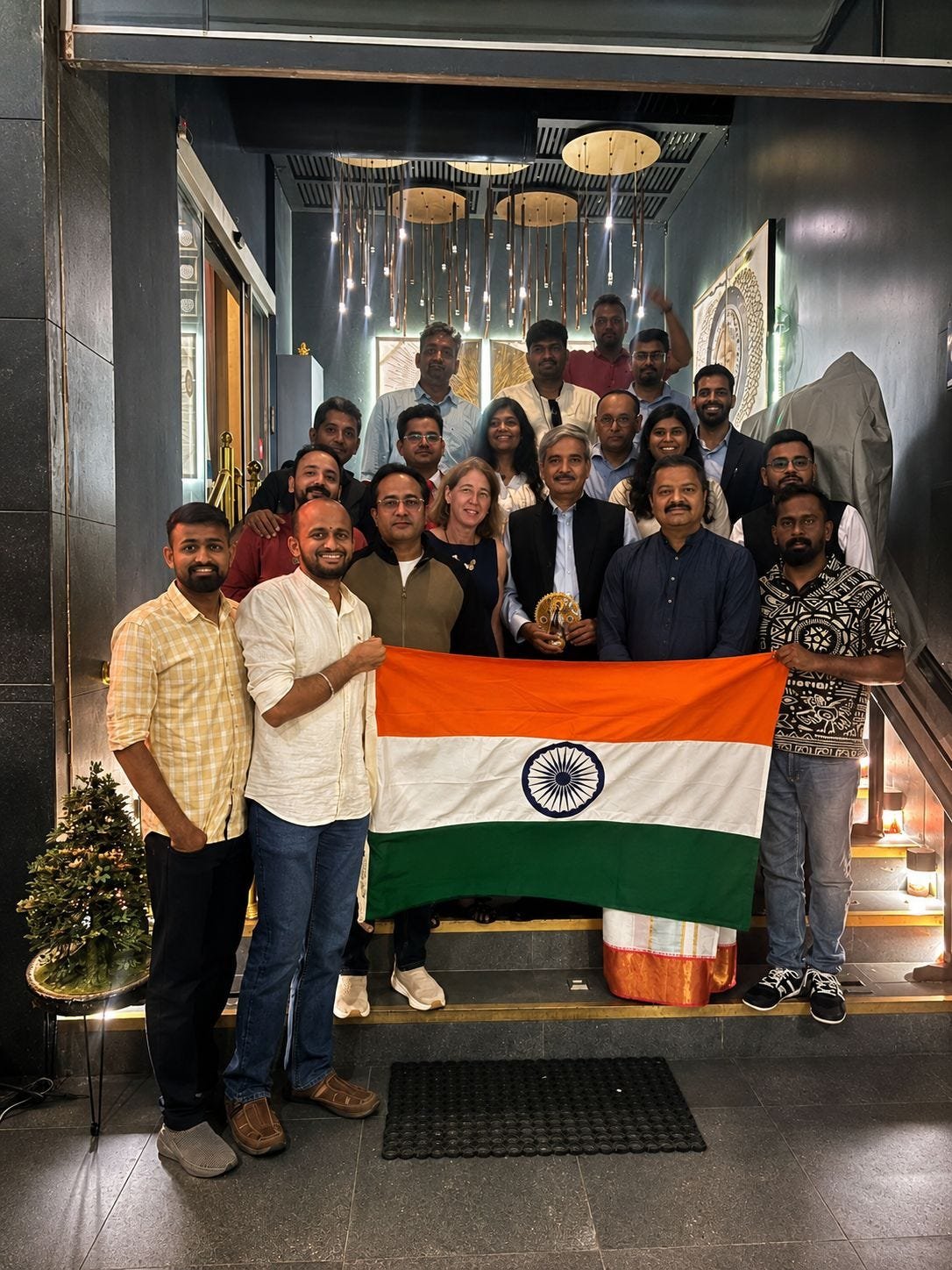
The second visit had a different design. The Consulate General of Israel to South India invited me from 20 to 26 June 2026 as part of an eighteen-member delegation called Supporters of Israel. This was not a briefing on a cause. It was Israel offered as an experience. The program moved from tragedy to modernity and refused to flatten either one.
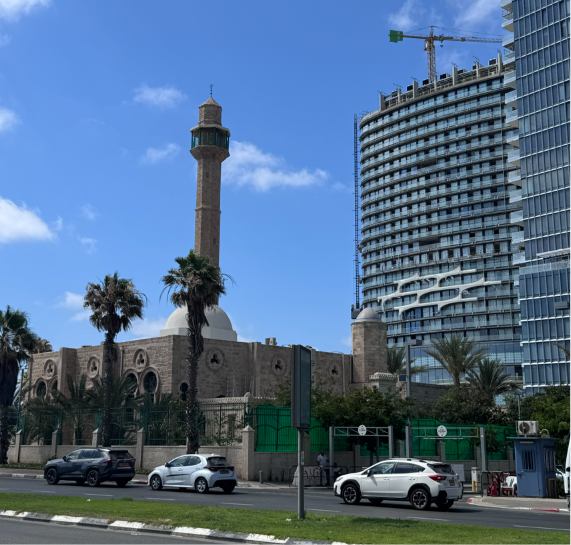
The route ran from Jerusalem and the Old City to Jaffa and Tel Aviv, out to the villages around Haifa and the Arab neighborhoods, through the rhythm of ordinary life and the nightlife of a country that keeps living. The people mattered as much as the places. The press, students, political opinion in its full range, and the Indian Ambassador to Israel, J.P. Singh, were all part of the program.
At the Technion we were received by Reda Mansour, its senior director of global resource development and a Druze diplomat, historian, and poet. He walked us through the institution, its history, and why it matters. The Technion is a place where departments compete with one another for Nobel-level work, while in India we are still arguing over who gets to claim a share in a foreign laureate. The Peres Center for innovation made the same point about a country that builds rather than waits.
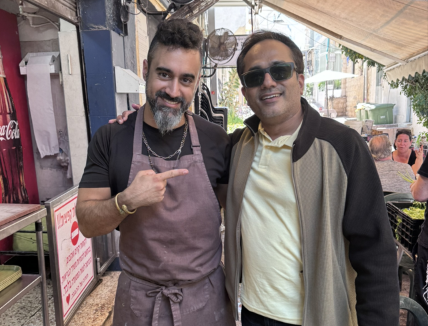
The food tour was not only about taste. It was about origin. Yemenite Jewish food took root in the land long before 1948, carried by communities that migrated under Ottoman rule and earlier.
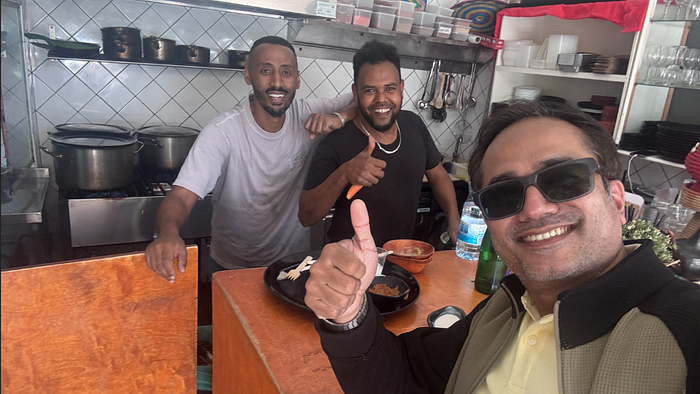
The kitchens of the ingathering, Yemeni and Ethiopian and more, are a living record that the Jewish return did not begin with a modern state. It runs back through centuries. A cuisine with roots that deep is its own argument for a people’s claim to a homeland.
What Western Campuses Missed
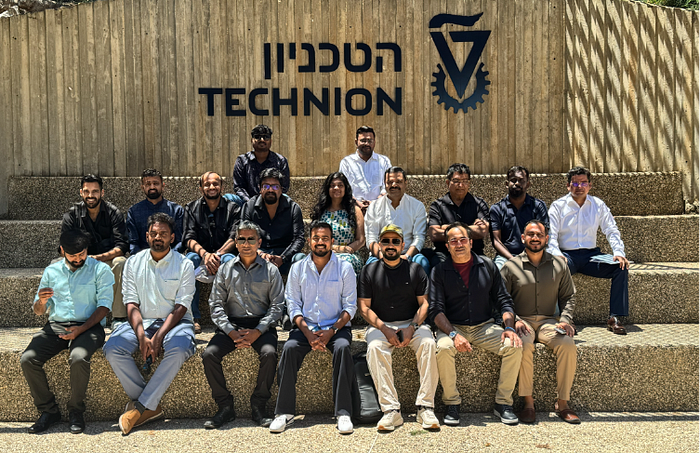
The most important thing I saw at the Technion was not in a lab. Arab and Druze students there run extra classes for their Jewish classmates who are away on reserve duty, so that no one falls behind on the work. That is the campus the apartheid slander pretends does not exist. Here the shared goal came first, and the claim of apartheid against Arabs, Christians, and Druze did not survive contact with the place.
Get Arif Hussain Theruvath Mohammed’s stories in your inbox
Western universities took the same conflict and turned it into theater. Israeli students took it and turned it into solidarity. One campus manufactures division for a camera. The other quietly closes ranks so that a classmate in uniform does not lose a semester. The protests staged across the West perform the conflict for an audience rather than understand it, and the performance only feeds the fire. That contrast is the whole lesson, and most of the West missed it.
Two Jews, Three Opinions
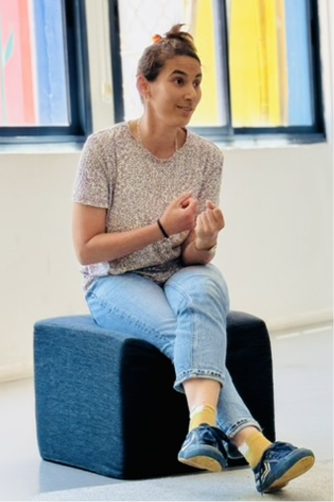
The program also took us, on purpose, into the left and progressive ecosystem. None of it was screened off, and that openness was the message. I spent time with Eylon Levy, whose work sits in advocacy and strategic communication. His positions do not fold neatly into a left or right label, and that is part of what makes him effective. The point of these encounters was never which side a person stood on. It was that the argument runs in the open.
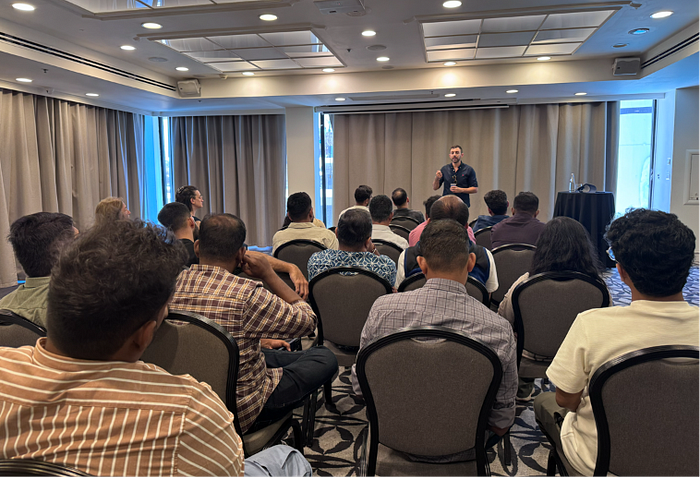
The old line is that you put two Jews in a room and you get three opinions. I watched it happen. The right argued with the left. The progressives argued with both. And every one of them still identified as a Jew and a Zionist. The disagreement was not a weakness in the nation. It was the nation. Identity was doing the work that argument could not break apart. That is what holds the country together, and it is the exact opposite of how a hostile narrative describes it.
The Media Front
The Israeli press took the delegation seriously. Josh Aronson of Maariv interviewed us and ran the visit under one line. Israel is the lighthouse. That framing is the kind of coverage I want to multiply, because it is the work I came to do.
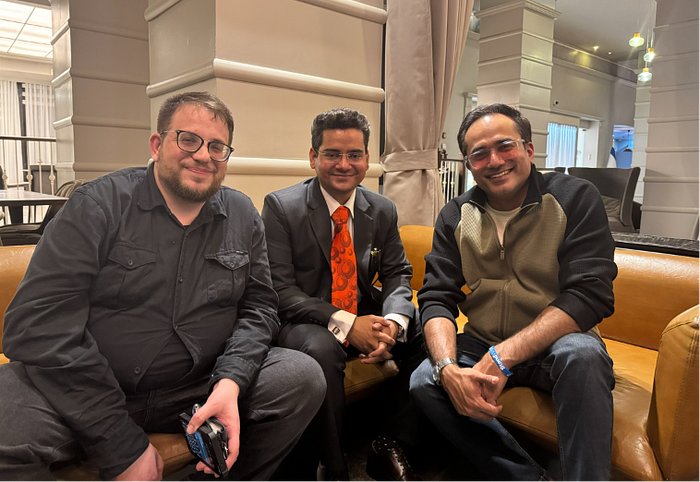
I came this time with a specific purpose: to build the media bridge between India and Israel. Both countries still lean on mainstream media, and both are behind where they need to be. The future is social media and independent news, carried by the kind of researchers, creators, and journalists this delegation was built from. What that future needs is organization, structure, and access, so the truth reaches people before the mainstream can bury it or bend it. India is the natural partner in this. Both nations fight cross-border terror, and both meet the same biased reflex, even from the United Nations and the humanitarian organizations that are supposed to stand above it.
The textbook example is Eylon Levy’s video of the aid. Legacy outlets had run hard with the claim that Israel was starving Gaza. Then Eylon Levy, who heads the Israeli Citizens’ Spokesperson’s Office, posted footage of aid piled up and sitting undistributed inside Gaza. Much of that aid moved through the Gaza Humanitarian Foundation, the mechanism built to get food to civilians while bypassing the armed actors and looters who had bled the old system. That meant keeping it out of the hands of Hamas and away from the compromised UN and UNRWA channels that had let the diversion happen. The mainstream ignored the Foundation’s role and underplayed its effort, even though it was carrying the load. Part of the reason the aid piled up in the first place was the UN’s own refusal to cooperate with it. The food was already there, and it should have been eaten. The image did what no press release could. It forced the mainstream to back off the starvation narrative and report the reality on the ground. That is a clean win for social media and independent news, and for a single communicator like Eylon. It is a case study in how the information war is actually fought, and it is the front where I can contribute the most.
From Understanding to Conviction
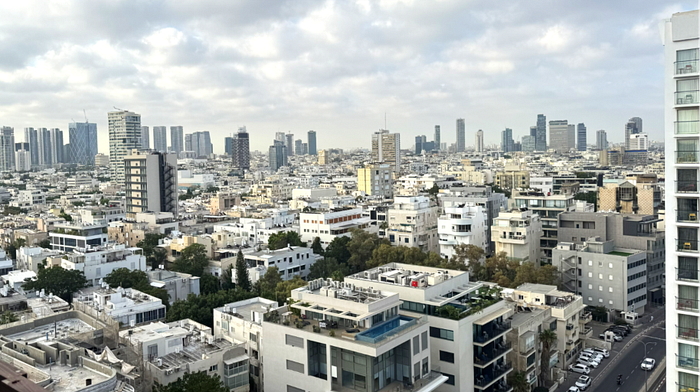
The contrast between the two visits maps a clear progression. The first built understanding. The second built conviction. I have now seen Israel twice, from two completely different angles, and my position has not moved. I stand with Israel, and I say so with more confidence than before, because the second visit gave the first one ground to stand on. The first visit could be called a study. The second made it personal and concrete.
What India Should Take From This
The second visit was about experience, but it did not stay personal. It left me with a clear agenda for India. These are the measures I came home convinced we need.
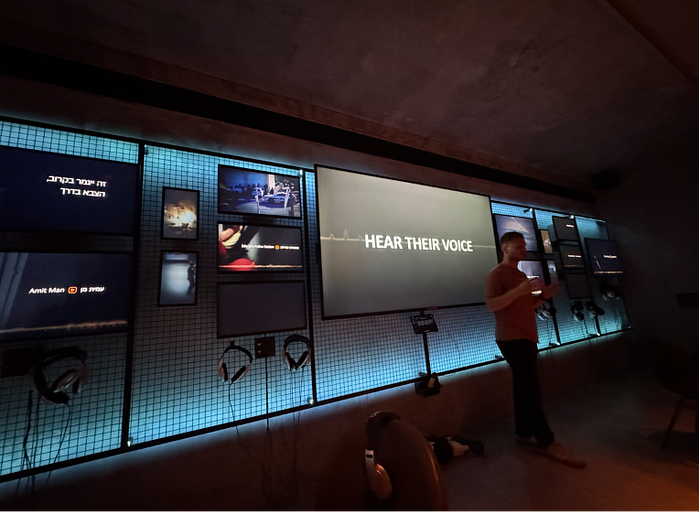
The first lesson is memory. Israel documents its history with a seriousness India has never matched, above all the tragedies and the terror, from the Holocaust to October 7. Memory there is treated as strategy, not sentiment.
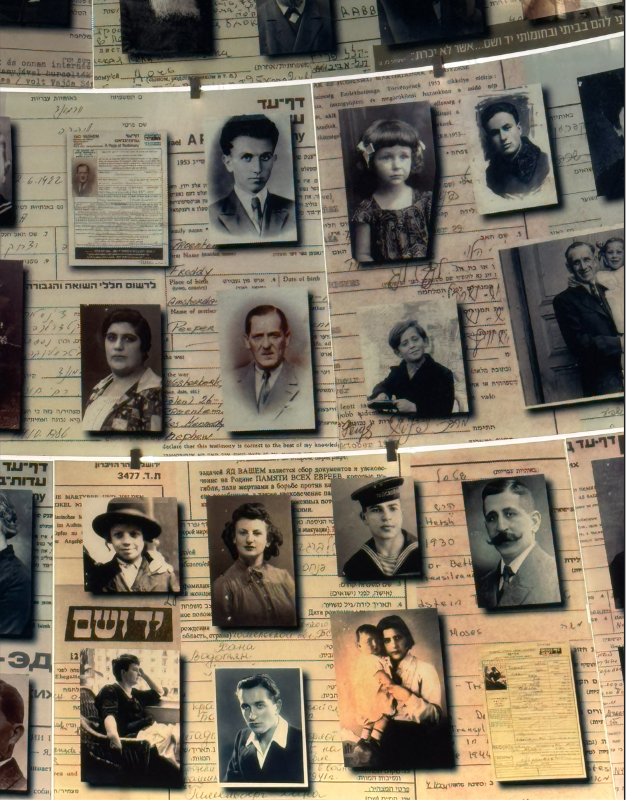
A nation that fails to record its own suffering hands others the power to distort it, deny it, or turn it into a weapon. India has the opposite habit. We have failed to preserve and communicate the truth about our own wounds. The displacement of the Kashmiri Pandits, Partition, the 1921 Malabar violence, Direct Action Day, and recent attacks like Pahalgam are suppressed, presented selectively, or staged for political optics. That does not produce peace. It produces confusion, resentment, and unrest. Building a serious memory infrastructure is a national security task, not a cultural footnote.
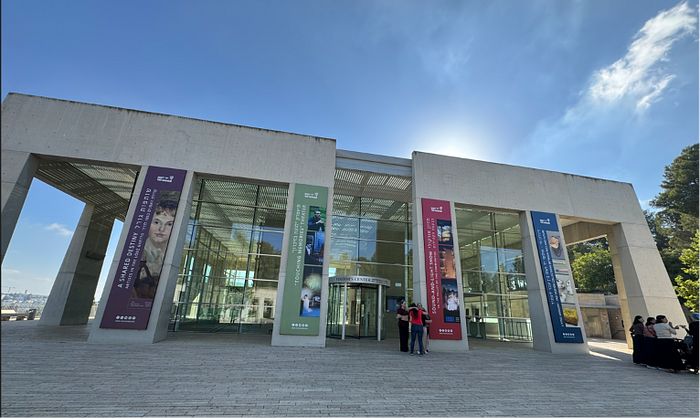
The second lesson is national security. On terrorism, India has much to learn from Israel’s preparedness and clarity. We need stronger terror watch-listing, deeper counter-terror alliances abroad, and real monitoring of ideological radicalization networks at home. Hamas and the Muslim Brotherhood, along with their sympathizers and the Jamaat-e-Islami-linked ecosystems in India, cannot be allowed to radicalize Indian Muslims or normalize extremist narratives under the cover of activism and victimhood politics. Naming the network is the first step. Disrupting it is the next.
The third lesson is the information war, and here the cooperation can run both ways. Indian influencers, researchers, activists, and independent journalists can help Israel counter misinformation. India has faced the same assault, including during Operation Sindoor. The two countries should build together: novel tools, shared fact-checking ecosystems, AI-driven tracking of misinformation, and even startup-led alternatives to platforms like Wikipedia, where ideological capture and narrative manipulation are real problems. This is the most immediate and the most winnable front.
The fourth lesson is tourism, and it is an open opportunity. India is already a favored destination for Israelis, especially after their IDF service. To capture that, India has to raise its game on cleanliness, safety, quality, hospitality, and travel infrastructure. This calls for a national tourism development program with serious private sector participation, and Israel is a natural starting point for a focused partnership.
Underneath all four lessons is a single shift. Social media is now the battlefield. Most of my fellow delegates were not diplomats or politicians. They were communicators and advocates who believe in fact-based storytelling, because public opinion is no longer set by governments and legacy media alone. It is set by creators, researchers, journalists, and ordinary citizens who can tell the truth faster than a propaganda machine can manufacture a lie. That is the people-to-people bridge between India and Israel, and it may become one of the strongest pillars of the relationship in the years ahead.
What Comes Next
I am convinced of the potential, and not in the abstract. There is real work to do between India and Israel, and most of it is not ceremonial. It is media, narrative, technology, and people. My next visit will not be to see. It will be to do. The seeing is finished. What remains is collaboration, with solid plans and real action, for the benefit of both countries.
Gratitude
My thanks go to the Consul General and the entire team for the care and the seriousness of this delegation. Nothing about it was casual, and that matched the spirit I tried to bring to it. My thanks also to my fellow delegates, eighteen people who turned a structured trip into a shared one. I returned with more than notes. I returned with partners.
I am ready for the next stage. This is now the time to act.
Warm regards,
Arif Hussain Theruvath
Kochi, Kerala, India
30 June 2026



No Comments